
Your Meditation and Mindfulness: Why should I bother? blog post
Discover mindfulness and see it it's for you.
MEDITATIONWITCHCRAFTBASICSWITCHCRAFTMINDFULNESS
Shawnee Baren
4/18/2023
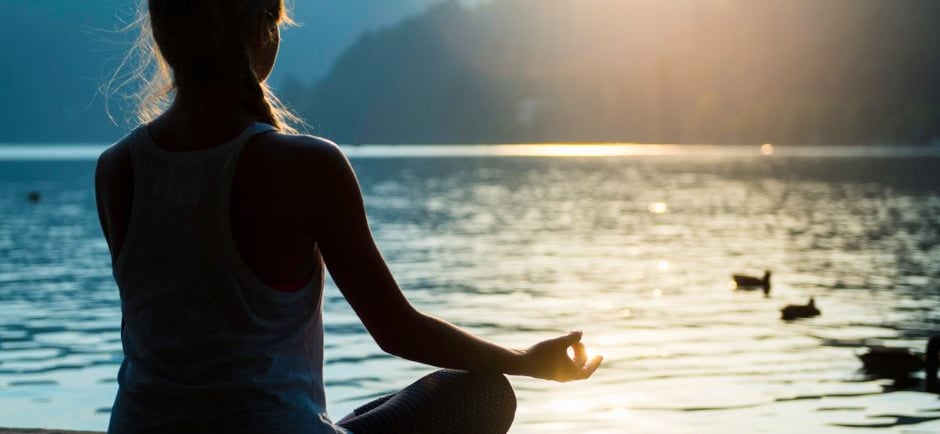
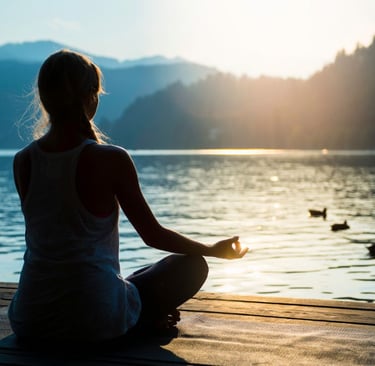
These are just a few of the comments I have heard about meditation and mindfulness that we are going to clear up. Mindfulness is a huge help in combatting stress, anxiety, depression, and the emotional combativeness that seems to go hand in hand with today’s fast-paced lifestyle centered around multitasking like a pro. Heck, we don’t even go to the bathroom anymore without our phones playing music, while we surf the web, check the scores, and see what is up on social media. Meditation is a form of mindfulness, but it is not the only form of mindfulness, and mindfulness meditation is only ONE form of meditation.
Why should you mediate? How does it help with stress, anxiety, and depression? First of all, it is simple; you can do it anywhere, at any time. You don’t need any tools or props. (Though they can help when you are getting started.)
While it is simple to do, it does a lot of things in our brains. You will often hear meditation called a practice. It is called this because it takes time to perfect, but also because the more we do it, the more it strengthens pathways in our brains. These pathways are responsible for our thoughts, sensations, feelings, and actions. By strengthening these pathways, we improve our memory; ability to learn, our attention, and our awareness. It also soothes our sympathetic nervous system.
There have been some early studies that show that meditation can actually increase the density of gray matter in areas of the brain. This helps counteract the deterioration of the gray matter caused by inflammation that causes stress, environmental pollution, and the high sugar and processed diet that we eat.
Meditation also helps calm us down. It can deactivate your fight or flight response or your sympathetic nervous system. This is the part of your nervous system that releases stress hormones when you encounter a threat. When we live with stress all too often to get stuck in the stress response cycle.
What is supposed to happen is that after the danger or stressor has passed, your parasympathetic nervous system activates and allows you to rest and relax. But when we do not allow ourselves to relax, the buildup of stress and the hormones associated with stress can make us sick.
Meditation triggers our parasympathetic nervous system and helps us to rest, relax, and come out of that stress state. Meditation can decrease emotional reactivity. Studies have found that overtime meditations can reduce pain, depression, stress, and anxiety.
It helps you disengage from stressful situations and gain new perspectives. This allows you to ACT rather than REACT to the things in your life, whether good or bad. It helps you be in control of your emotions and your reactions to them. It helps you combat Dis-Ease, which can lead to great healing. This is where the magic really starts to happen.
OK! How do I start?
First, start slowly and be patient and gentle with yourself and your monkey mind. Don’t jump in and try to do a 20–30-minute silent, clear your mind of everything, transcendental meditation. Start with 2 minutes. Work up to 5 minutes. Then maybe 10, 15, or 20. Practicing 10-20 minutes a day, most days or even just several days a week, will get you amazing results. Especially if you are just starting out. After getting the hang of it, and you want to try out that super cool-looking guided meditation journey you saw on YouTube, go for it.
Basic meditation is simple! But that does not necessarily make it easy. Especially in today’s fast-paced society, where we are used to our minds being constantly stimulated. We tend to think WAY too much.
Start by taking a couple of deep breaths. In through your nose and out through your mouth. (If you are stuffed up, don’t worry…do it how you can). Then let your breathing relax into a normal breathing pattern. Just notice it and notice as it begins to slow and deepen on its own. Just keep concentrating on your breathing.
Stray thoughts will come up. That is perfectly fine and natural. Notice them. If it is something important, take note of it in the back of your mind, then let the thoughts float on. Don’t hold on to them or dwell on them. Just let them pass. Bring your focus back to your breath.
Once you feel your breath has stabilized into a nice, deep, calming rhythm, you can begin to scan your body. You can begin either with the head or the toes. Either way, go through each body part and focus on it, relaxing and releasing any tension. Then move on to the next body part, until your whole body is completely relaxed.
Again, as you do this. Stray thoughts will come up. Notice them. Acknowledge them and let them go.
If your monkey mind is really not letting you alone. Or you are struggling with sitting still or being jittery, here are some of my favorite tips:
Use a worry stone, a crystal, prayer beads, or heck, even a fidget toy to keep your hands and part of your mind busy.
Try meditation while rocking in a chair, swaying back and forth, walking somewhere you will be safe, as your consciousness is occupied with the meditation.
Try meditation while doing a mindless, repetitive task. Folding laundry, doing dishes, or doing a repetitive crochet or knitting project, etc.