Lammas: The Fate of John Barleycorn, Baking Bread, and the Funeral Games for Lugh’s Foster Mother
Lammas is a pagan-Celtic holiday that has its mythological origins is the Funeral Feast that Lugh hosted in honor of his stepmother. Find our more here.
Melissa Wittmann
8/1/2025
“There were three men came out of the west,
Their fortunes for to try;
And these men made a solemn cow-
John Barleycorn must die.”
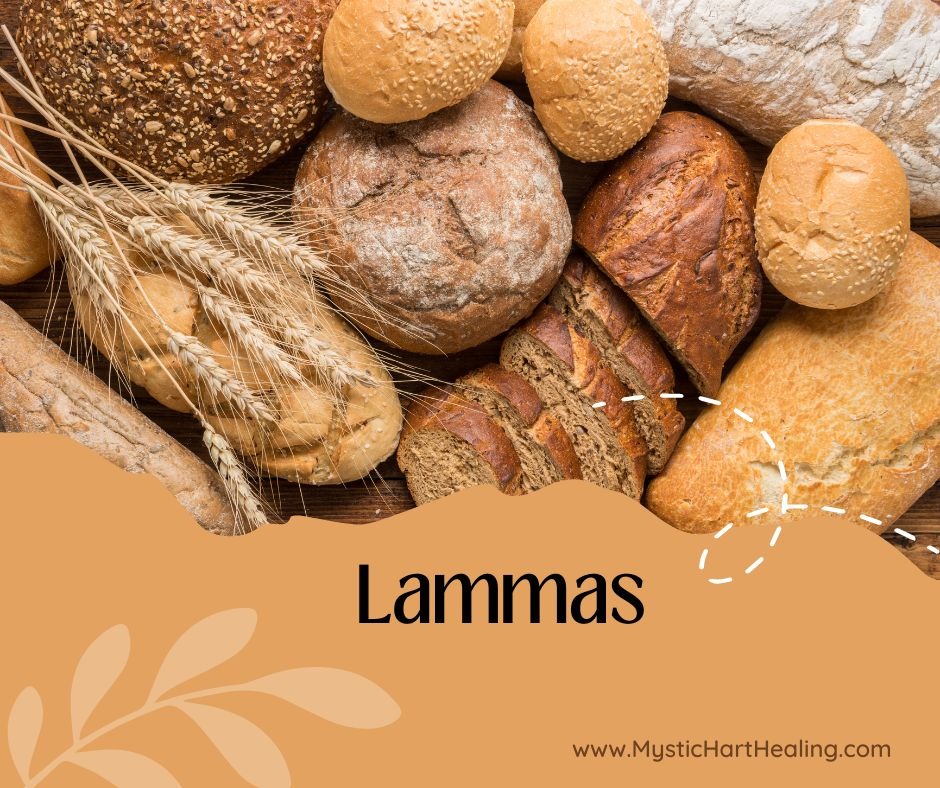
It’s August 1st and the garden is overflowing with zucchini and the fields are swaying with ripe grains ready for harvest. The old farmers are calling this the Dog Days because even the dogs want to rest in the shade during the afternoons and the heat is oppressive. Under the shady trees at a local park, a group of pagans gather for a feast. Spread out of the table are loaves of bread, corn on the cob, grilled meats, fresh tomatoes, and fresh fruits. They thank the gods for the harvest and celebrate the community they have formed. A loaf of bread shaped like a person may be sacrificed to the harvest, tools of the trade may be blessed, and a talent show may occur. Everything is focused on the the first bounties of the year and two guys names Lugh and John, who have very different roles in the day.
This is the Pagan sabbat to Lughnasadh or Lammas. In the Northern Hemisphere it occurs around August 1 or 2, halfway between the Summer Solstice and the Autumn Equinox. This festival originated in Pre-Christian Ireland to celebrate the first grain harvests of the season. There was a superstition in Ancient Ireland that if you harvested the grain before the first of August, it meant you were bad at managing your resources and/or it would bring about a poor harvest for the year. Lughnasadh was the day the community would come together, ceremonially harvest the first sheaves of grain, bake it into bread, share it as a community at a feast. Community was, and still is, very important. Feast days like this were a great way to celebrate the community that kept everyone alive.
Before the people of Ancient Ireland, there was the people of the Mythological past in Ireland. One of those people was named Lugh. Lugh was a King of his clan, a master craftsman of many skills (some say there was nothing Lugh wasn’t good at), and a member of the Tuatha de Danann. He created an annual event called the Assembly of Talti to honor his Foster Mother, Taulti, after her death. This event lasted several days and culminated on August 1 with a celebration of the time Lugh defeated the Spirits of the Otherworld, who wanted to take the entire harvest and not share it with everyone. Lugh defeated the Sprits, thus ensuring that everyone would have enough to eat. This festival included horse races, demonstrations of skills within the community, displays of martial arts, and displays of local agriculture. This festival was extremely popular and evolved over time into the harvest fairs and county fairs of today.
When the Christians came to Ireland, Lughnasdadh became Loaf-Mass, or Lammas. It became the day the Church honored the Eucharist and the bread that became Christ’s Body. It was a way for the church to celebrate the sacred day of the Irish with a Christian spin on it. Many churches to this day have a loaf mass that celebrates the harvest and God’s blessing of the grain to feed His followers. I attended a Lutheran church as a child that celebrated Loaf-Mass with a pastry breakfast before the service and a sandwich lunch after the service. The women of the church would also sell bread and cakes at the lunch to raise money for the Sunday School. It was fun and pretty tasty.
So, how does some guy named John Barleycorn and his death fit into all this yeasty goodness? John Barleycorn is the English/Scottish personification of the grain barley and the alcoholic beverages (beer and whisky) that barley produces. Nobody is totally sure where his story comes from other than he comes from the oral traditions of England and Scotland. He may be linked to a figure by the name of Beowa. Who was believed to be a king whose name is believed to mean “Barley.” Kathleen Herbert who puts this idea forward, doesn’t really have much history on this. Others say that John Barleycorn relates back to the Wicker Man myth, where a man made of wicker was sacrificed. They tie the burning of barley in the malting process to the burning of the Wicker Man. In a Scottish folk song written prior to 1568, we are introduced to a character named “Allan-a-Maut” who some say is John Barleycorn. Allan-a-Maut is the personification od barley. Allan-a-Maut” appears in a Scottish poem from 1568 named :Quhy Sowld nocht Allane Honorit Be” and was a popular character in English broadsides of the 17th Century.
The first mention of John Barleycorn by name was in a 1624 London broadside called “A Pleasant New Ballad to sing Evening and morn/of the Bloody murder of Sir John Barley-corn.” In 1782, Robert Burns set the tone from future renditions of John Barleycorn’s tale. The myth of John Barleycorn shows up in music to this day. But who was he?
John Barleycorn is the personification of the important grain of the day, Barley. Corn is an old English/Old German/Old Norse word for grain. Barley was a vital food in the past. It was used to produce bread, beer, and whiskey. In the modern world, this may not seem like it was all that important of a food, but in the past bread was a major staple in the diet of the population and in areas where water was unsafe to drink, beer was consumed. John Barleycorn was the grain that kept the people alive. He was the God of Grain who sacrificed himself every year for the survival of the population and was reborn each year the so he could sacrifice himself again. One way my coven honors John Barleycorn’s sacrifice was to bake a human shaped cornbread and sacrifice him before the meal. Part of him was left as an offering to the local wildlife and part was consumed in our feast. Most modern people have heard of John Barleycorn as a song, the most popular version of which is sung by the band Traffic in 1970.
Modern society has removed us to a degree from the seasonality of our foods and the cycles of agriculture. Grain doesn’t have a season anymore, we can buy flour and produce all year long. Many modern pagans do their best to honor the seasons of the earth and our agricultural past. You don’t need to shun society and move to a farm to honor the seasons, just take some time on a regular basis to see what is growing around you and what foods are “in season” or not. We are now entering the season of Harvest, or in modern terms “apple cider and pumpkin spice” season. This is a time of giving thanks to all the bounty in your life and to start putting away some of that bounty for the future. Lugh tells us to celebrate and John Barleycorn sacrifices himself so we can eat tomorrow.
Celebrate Lammas by having a meal with those who are your community. Breaking bread is a term for eating together. This is a great time of year to get together with those you love and just enjoy the day.