Getting Salty: History of Salt in Witchcraft
Salt is everywhere and used for everything, mundane and magical. Learn the history of this witchcraft and spell work powerhouse.
WITCHCRAFTWITCHCRAFTBASICSHISTORYCRYSTALSMELISSA
Melissa Wittmann
5/25/2025
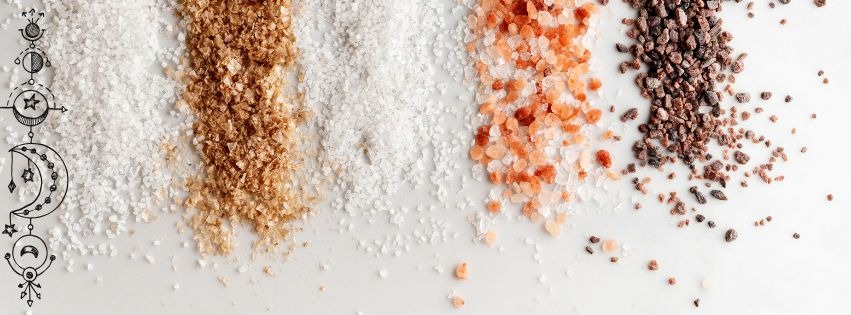
Salt is an essential element to humans and many animals. It is also a vital tool to many witches. Witchcraft and salt are connected all the way back to the earliest religions. It can purify, disinfect, season and preserve food, protect things, and even be used as an offering. Salt, at its most basic, is a crystal and crystals are useful.
Archeologists believe that some of the first tools created by man, after creating hunting tools and domestic tools, were mining tools used to mind salt. We have many artifacts from the Early Neolithic period focused around mining and extracting salt. Things like clay basins to evaporate water to leave behind salt, catchments for that water, ruins of structures to evaporate salt water, and vessels to help shape and transport salt bricks.
One of the earliest European sites pertaining to salt production was found in Vigo, Portugal. The roman’s established an evaporate mining settlement. This site dates to a period just before written history came about. Ancient Romans used salt to make Mola Salsa, a blend of wheat flour and salt often used as part of a ceremony or as an offering to a deity.
Another Roman site is located in the Alps; Moriez, France; and this one is next to a salt spring. One of the best-known artifacts found here is a lathwork frame that dates to around 5,600 BCE. The Romans built fortifications around the spring and the village that the workers lived in. The bulwarks around the spring also helped to keep the spring from eroding.
Just a note, the myth about the Romans paying their soldiers with salt is false. Soldiers were paid in coins or in some cases, vouchers they could use like coins to buy what they need.
Across the Mediterranean Sea, Egypt was also building their salt empire. Salt is a major factor in what made the Egyptians a rich and powerful empire. When a caravan left Egypt full of salt there was a ritual performed to bless and protect the caravan. Priests would burn salt and herbs on hot embers.
Egypt was blessed with a vast area full of salt called the Natron Valley. This valley provided salt to not only Egypt but also anywhere the Caravans went. The salt from the dry lakebeds in this valley was used to season foot, preserve fish and meat, and as an important part of the mummification process.
For those who are counting, salt is mentioned 40 times in the Bible. One of the most famous mentions is God turning Lot’s wife into a pillar of salt because she disobeyed God and looked behind her as they were fleeing Sodom and Gamora. In Leviticus 2:13, God tells his followers to add salt to their grains and to never leave to salt out of any grains offered to Him.
Salt is even mentioned in the texts of the early Buddhist and Shinto. They believed that salt was a purifier and worked to repel evil. Generally to the right of the door, Shinto households would leave a little pile of salt to purify the house and those who enter it. This little pile of salt was called Mori Shio. To make sure death does not follow you home or so that you don’t bring bad luck home, salt is sprinkled over a person after then attend a funeral in a Shinto household.
To the Buddhist, salt represents the themes of purity, transformation, and impermanence. It is a highly spiritual item. There are ancient medicines that call for salt to be used in them for it’s purifying effect.
In the British Isles, the suffix -wich on a place name usually meant that that place was an ancient source of salt.
Into the Medieval era, salt has remained a vital part to folk magic. Salt was placed around butter churns in Normandy, Scotland, and Northeastern Germany as a way to keep witches from souring the butter and to keep them from harming the cows that provided the milk.
In medieval Ireland, salt would be sprinkled on a person while the Lord’s Prayer was read to break being “Fairy-struck.” In Bavaria and the Ukraine, this was done to make sure a child wasn’t bewitched.
The Medieval Christian Church held the belief that since salt was good and holy and witches were evil, a witch never added salt to their food. Yes, you could be accused of practicing witchcraft if you liked your food unsalted.
Salt was a vital part of Alchemy. It represented the path from being material to being spiritual. It was a symbol of transformation and enlightenment. It was also seen as a purifier.
In early zombie lore, salt would kill a zombie. This is lore from before there were zombie movies, but rather the time when Haitian voodoo created zombies. It is said that if you put salt into a zombie’s mouth, they will realize that they are already dead and fall lifeless and be unable to rise again.
Salt is still widely used in modern witchcraft and folk magic. Salt is used by modern witches to mark out a ritual circle because it creates a barrier that keep negativity out of it. Salt can be used to represent water (when mixed with water or is salt from the sea) or
earth. Salt is used to ritually purify tools, crystals, people, etc. It can be used to bless and protect a home by placing a line of salt at the entrances. Spell jars are also a favorite use for salt because of all the properties salt has and the ease of getting salt. Modern witches use salt lamps to purify an area and bring calm and joy into that space.
There are witches today that refuse to use salt in their magical practice due to the effects it has on the environment. If you put salt directly on the soil, it will poison the soil and kill anything growing there. Even witches that use salt in magic will sub Epsom salts for sodium salt. Epsom salts have a different chemical formula and actually nourish the soil. Also, many witches like to bury spell remnants, remember, never bury anything that contains salt or is not biodegradable. There are other ways to get rid of those spell remainders.