Altars, Shrines, and Sacred Spaces, Oh My!
A look at Altars, Shrines, and Sacred Spaces. Find out the similarities and differences.
WITCHCRAFTBASICSWITCHCRAFTMELISSA
Melissa Wittmann
8/27/2023
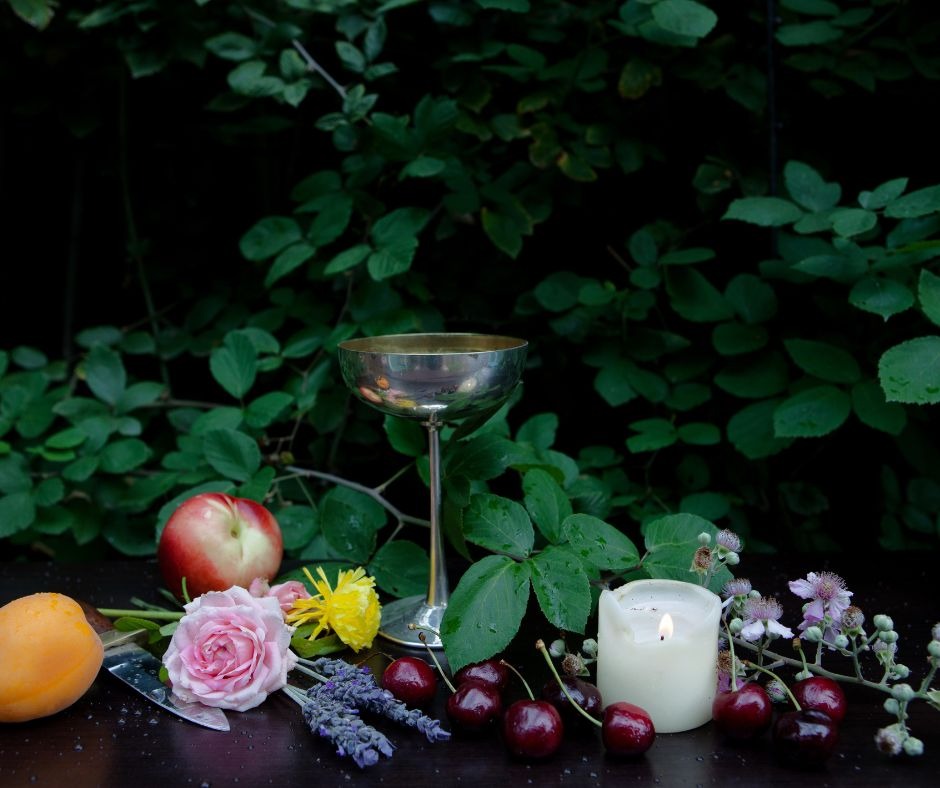
Unless you have lived somewhere with no human contact for your entire life, you have seen an altar or shrine at some point in your life. They are such a part of the human experience that we almost take them for granted. If you come from a Christian background or have participated in Christian ceremonies, you have seen the altar at the front of a church. Go in to pick up take-out at a Chinese restaurant and you will often see a shrine to Buddha or Quan Yin behind the register. Visit the home of someone who lost a beloved pet, and you might notice a shrine to that pet wither in the garden or on the mantle. It’s a human thing to create places that are sacred to commune with the Divine, remember the deceased, or give thanks for blessings.
The oldest known temple was built over 11,600 years ago in a place in modern day Turkey called Gobleki Tepe. However, there have been fragments of temples and shrines dating even further back. It seems that wherever hominids had the basic beliefs in religion, they created sacred space to practice that religion. Some archeologists believe that many paleolithic cave paintings may have been created in spaces that were sacred to the cultures that painted them. Some cultures throughout history are famed for their vast, opulent temples to honor their gods and others seem to have only honored their gods in simple rustic sacred spaces. Why did one culture worship outdoors in a clearing while others built entire cities to their gods? Truthfully, we may never know. It may have had to do with the wealth of the culture, or it may have had to do with the way they saw divinity’s role in the world. There were even cultures that only allowed shrines and altars in public places accessible only by the priesthood and other cultures that maintained small shrines and altars in the homes that were accessible to everyone. The role of religion and sacred spaces is so varied in humanity.
So, what makes an altar an altar, a shrine a shrine, and sacred space sacred. By definition, an altar is “table or flat-topped block used as the focus for a religious ritual, especially for making sacrifices or offerings to a deity” according to The Oxford Languages Dictionary website. I’ve read in several pagan Books of Shadows that define an altar as a table used for ritual, offerings, and as a workspace for workings such as rituals, spells, and divinations. It is a sacred place where you do your magic. Some people have altars set up in their homes and gardens that they do workings at on the daily, while others only set up an altar as needed. Most of us are used to seeing a permanent altar in the front of a church. Altars can be found in the sacred spaces and temples of Christians, Buddhist, Hindus, Pagans, Jewish, and some Islamic sects.
Within Paganism, there are permanent altars temporary altars, and portable altars. Permanent altars are pretty simple to explain; they are altars that a set up all the time to do workings at. They are a dedicated sacred space that is maintained to always be usable. People with yoga rooms or ritual rooms will often have permanent altars. They are also found in the gardens of people who like to do magic in their yard. With an altar that is permanently set up, it can be more elaborate, have layers upon layers of spells going at once, reconfigured if needed, and can be constructed of more durable materials.
If you attend a ritual in the park, you have most likely used a temporary altar. They are set up for a set period of time and then taken down. They tend to be a little simpler in nature. Often temporary altars are used for one working or ritual and removed. They are set up in a space that is temporarily sanctified and once cleaned up, leave no trace but a few offerings. This type of altar can be created just about anywhere. When I do workings at home, this is often they type of altar I often use because my home altar is more of a shrine than a working altar. Just about anything can be an altar when the need is there (a coffee table, a flat rock, the hood of a car, a picnic table, etc). Fire safety and not damaging the environment should always be taken in to consideration. This type of altar is good is you are holding a ritual in a place that is not your usual ritual space (a local park), you don’t have the space or situation for a permanent altar, you need to do a working on the fly and don’t have time to get to your permanent altar, or you are participating in a public/semi-private ritual. Any place can be sacred, and any place can be an altar.
Travel altars are temporary altars that you take with you when you are traveling or staying someplace that is not your regular altar location. Often these are small, pared down altars that are used to honor deities, cast protection spells, and do minor workings. They range in size from can be stored in a pill bottle or mint tin to the size of a suitcase. It is a great coven activity to create travel altars as a way of learning about the basics of setting up an altar and the tools used. When I travel, I generally pack a small piece of selenite to cleanse the energy of where I go, a few leaves of sage or a short stick of incense to aid in clearing the energy and maintaining the energy I want to bring in, and a battery powered tea light or two to honor the spirits and gods of where I go. I also add trinkets and stones that I find while traveling to my travel altar. I know my set up is basic, but I also don’t want to freak out the hotel staff of wherever I am and I am a strong believer that magick in within and ultimately I don’t need a lot of tools. Once again, fire safety is vital, and you also don’t want to do anything that will get you kicked out of your hotel or possibly damage anything. Sage and incense can make a room smell good and alter the energy of a room without having to be lit, just sit on a sunny windowsill or on top of an air vent. A great way to honor the local spirits is to leave a glass of water sitting on your altar for them. Also, be aware that housekeeping may move your objects or throw out anything they think is trash laying around so don’t use anything you are overly attached to or expensive for your altar unless you put it in your suitcase or inside a drawer out of sight.
Shrines are a type of altar where you honor ancestors, gods, spirits, or a representation you wish to memorialize. They are places where you come to worship and honor and are not the working space of an altar. It is a place that you can go to to commune with the spirits or gods within. Often they will contain statues, relics, mementos, offerings, or representation of the entities being honored there. They are something found in many of the world’s religions and can be as elaborate or subtle as the maker wants them to be. There is a shrine to Our Lady of Lourdes about an hour’s drive from my home and even though I have never been there, many people go there to commune and make petitions to the Virgin Mary. And in less than 30 seconds (including time to step around the dog) I can be at my shrine to my patron deities in my living room.
On a simple oak bookcase that my father built as a gift for my mother when they needed a place to put books are an family altar or shrine space. Mostly we use it to commune to our patrons and to leave offerings. About the only time it is used as a formal altar is when we are casting spells that are maintained over at time frame of several days or more. On my shrine I have candles dedicated to my patrons’ trinkets that have sacred meaning to whomever placed them there, and offerings to the house spirits and such. If I need to cast a spell or do a ritual, I tend to clear the coffee table off and work there. Because we knew we would be burning candles on it, the altar top is covered with ceramic tiles that are fire-proof and easy to clean. In the past, if an altar cloth was used, the tiles would be placed on top of the altar cloth to protect it. I have always been big on fire safety. My husband and I each have most of half of the altar top for our area, plus an area in the center that is shared items like an incense burner and sometimes a decoration.
Unless you are sharing a shrine with others, they are personal spaces. The decorations used in a shrine should mean something to the person setting up said shrine and represent whomever or whatever is being honored there. Candles are a common addition as well as statues, pictures, or small objects that represent the honoree. A shrine to a god or goddess can have crystals, flowers, jewelry, statues, poetry, etc., that correspond to the deity. A memorial to a pet may include a plaster cast of a paw print, a photograph of the pet, maybe a few strands of their hair or a whisker or two. If you’ve seen the movie, Coco, you saw something called an Ofrenda in the homes, churches, and even graveside. An Ofrenda in simple terms is a memorial to someone who has passed away where they are remembered and given offerings. It is a very beautiful cultural tradition.
If you do workings at it, it is considered an altar. If it is a place to commune or worship, then it is a shrine. It is perfectly fine to have a shrine and/or altar, or even multiples of each. They are sacred spaces and should allow you some form of connection to the spirits you wish to connect with. Many kitchen witches will have small shrines in their kitchen where they may leave offerings to, and honoris whatever way they feel necessary. For years I had a Quan Yin statue in my kitchen shrine as a reminder to be mindful then I cook and to bring blessings to everything that came and went with my kitchen. On my desk, there is a little shrine with crystals, a tiny cast iron sewing machine figurine from my mother-in-Law, my mother’s ring and watch, and a deceased bee in a bottle. This shrine is dedicated to my muses and my Patrons for all the help they give me in my creative endeavors.
Altars and shrines should be personal to the person using them. If you are within a Tradition, there are probably certain things that need to be done and, on your altars and shrines for anything involving said tradition. However, for your non-tradition-based altars and shrines, you can do whatever appeals to you. Maybe you are a little more Mid-Century Modern and a little less Medieval Gothic, obviously you are going to want to include Mid-Century Modern items on your alter and less black resin, Pentacle decorated, dragon ware. Maybe you want to use Grandma’s silver candle sticks and Great-Grandfather’s antler goblet, go for it! My altar is decorated with items I’ve gathered over the years from yard sales, thrift shops, and my travels. Your practice is unique and so should your shrines and altars be. Just, please consider fire safety and environmental impact when gathering tools and supplies for your altar. We don’t want to harm the Earth or burn our sacred space down.
Spiritual people seem to love to create sacred spaces. Little places in the vastness of the world that give us a moment to rest our mind and listen to the voice of the Universe. When we need to do magic, we know any place can be sacred for a time with a blessing. Divinity is all around us and even within us, there is no place that can’t be made into an altar or shrine for a time. There are times when I permanent, dedicated structure is preferred and there are times when where you are just has to do.
It is your sacred space, and you are free to make it look however you want it to look. Your tools and décor should have meaning to you. It’s the energy and intent that make a shrine or altar sacred, not the décor items. Nobody has the right to judge you for your altar. There are even some people that believe you should never share images of your altar because it takes energy away from it. If you choose to share images of your shrines and altars, that is entirely up to you and your deities. An altar or shrine is a personal sacred space, make it something you can connect with and enjoy communing with the Universe.