A Taste of Witchcraft Traditions
A look at some of the traditions in modern Witchcraft and Wicca
WITCHCRAFTBASICSWITCHCRAFTSHAWNEE
Shawnee Baran
2/12/2024

Horsa Tradition
Is a British Traditional tradition established by Sybil Leek in the 1960s and has continued to this day. It also includes the teachings of Christine Jones. They seek a harmonious relationship with themselves, others, and all things. The simple tenets of the religion and the seasonal rituals are the hallmarks of the tradition. Sybil Leek traces her traditional witchcraft roots back the New Forest in Britian.
Sacred Pentagraph Tradition
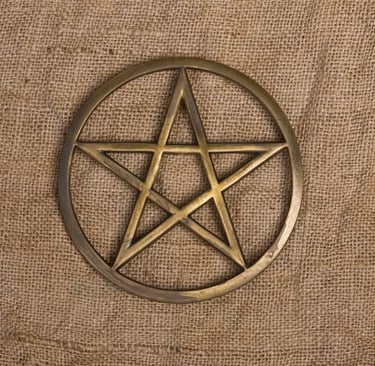
Is an occult-lodge based system of the Ancient Wisdom Tradition. It is a mystical tradition of Wicca that through coven work, is designed to help the seeker advance and become a competent occultist and adept within the field of Classical Witchcraft. The original founders were Tarostar, Charmaine Day, & Sybil Leek, who operated at the “Ancient Order of the Bell, Book, and Candle”. The tradition was founded in the 1970s.
Gala Witchcraft
Founded by Chief Elder, Casey Giovino. Their mission is to heal and empower gay men through witchcraft. Through the process of dedication and initiation into witchcraft, gay men are provided the support through their journeys of self-improvement and creative expression.
Alexandrian Wicca
Was founded b Alex Sanders and his wife Maxine. It is heavily influenced by Gardner and his tradition. It uses a degree system and had ties to ceremonial magic systems. There isa focus on the polarity between genders, and rites and ceremonies often dedicate equal time to the God and Goddess. Though is in initiatory there is no laity; every member isa priest or priestess.
British Traditional Wicca
Is a term often used in the U.S. to describe a specific set of covens that began in Britain. It is used to describe traditions that came out of the New Forest. Gardnerian, Alexandrian, Horsa are some specific examples.
British Wicca
This is a mix of Celtic and Gardnerian beliefs. The most famous of which is the International Red Garters. Following the teaching of the Farrars. They are fairly structured in their beliefs, and train through a degree process. Their covens are co-ed.
1734 Witchcraft
Was founded by Joe Wilson after a lengthy correspondence with Robert Cochrane (who was the founder of the Clan of Tubal Cain. It is a folkloric craft tradition. It often uses riddles to convey its mysteries.
Caledonii
This was formerly known as the Hecatine Tradition. It is Scottish in origin, and preserves the unique festivals of the Scots.
Celtic Wicca
Is a form of Wicca that is a cross between Celtic and Drudic beliefs. They use the earth elements as part of heir spells and worship Nature as well as the ancient gods and goddesses. Many believe in Faeries, Gnomes, and so on. Instead of the Summerlands they believe in Avalon.
Central Valley Wicca
Was established in the 1960’s and in the Central Valley of Northern California. They settled there because they believed that some ancestors of the Craft once lived there. It is believed to be an offshoot of Gardnerian tradition.
Ceremonial Witchcraft
This tradition incorporates a great deal of ceremonial magic in their practices Detailed rituals with an Egyptian flavor or a Quabbalistic flare are often used.
Circle (Shamanic) Wicca – Circle Sanctuary
Was founded by Selena Fox and Jim Alan in 1974. They were one of the few to start a non-profit, legal Wiccan Church; that was accepted by both the state and federal government. It is a very organized tradition. It incorporates many of aspects of Shamanism and Amerindian. Their main headquarters, Circle Sanctuary, is a 200 acre organic farm in the hills of Wisconsin.
Church and School of Wicca
Is a s Welsh-based tradition that was founded by Gavin and Yvonne Frost in the early 1970s. They presented their material through a correspondence class. Much of the material is the same in in their book.
Clan of Tubal Cain
A folkloric tradition. It was founded by Robert Cochrane and the tradition was passed down through Evan John Jones. They are also known as the People of Goda. They are a closed Initaiatory group aligned wit the Shadow Mysteries withing the Luciferian stream dedicated to experiential gnosis. Their tenants are Truth, Love, and Beauty.
Correlian Tradition
This tradition is dedicated to the advancement of the Pagan people and emphasized celebratory as well as initiatory Wicca. With its online Witch School is is committed to public access to ritual.
Covenant of the Goddess
A federation of over 100 covens, plus solitary elders and associates that is cross-traditional. They have come together to win recognition of the Craft as a legitimate and legally recognized religion. It was organized in 1975 by Coeden Brith. It was incorporated as a non-profit religious organization in California, but is now a nationwide organization (as well as international).
Dianic
This tradition was founded by Zsuzanne Budapest and Morgan Merarland in the 1960s. They pull their beliefs from many traditions. Many feminists and lesbians are drawn to it because of its exclusion of males. It had a great influence on the Women’s Liberation Movement in the ‘70s. It is sometimes call Women’s Spirituality. It is very female oriented, only praying to the Goddess Diana and her Maiden aspect of Selena and her Crone aspect of Hecate.
Discordianism
Sometimes referred to as the Erisian movement is a self-described as “Non’Prophet Irreligious Disorganization”. It began with the “Princpia Discordia, or How I Found the Goddess and What I Did to Her When I Found Her”, which is a collection of articles and ideas compiled by Greg Hill and J=Kerry Thornley in the 1960s. They believe that Chaos is just as important as Order. Humer is central, but its practitioners to no see it as just a joke, but a path for spiritual growth and liberation.
Feri Tradition
An American Traditional Witchcraft derived from the teachings of Victor and Cora Anderson and passed down through various initiates. Feri seeks to transform the individual through practices of ritual magic, meditation, and energy work. The tradition has been influenced by Huna, Conjur, Voodoo, Tantra, Celtic folklore, Christian mysticism, Yezidi mythology, and Greek gnosis. The tradition has split into two strands. One believe that the mysteries can only be taught in small experiential groups and the other that believes in can be taught through classes in larger groups with money charged.
Gardnerian Wicca
Founded by Gerald Gardner in the early 1950s. It allegedly traces its roots back to the New Forrest coven that included Dafo, Mother Sabine, and the Mason family. Much of its early liturgy was written by Dorreen Valiente, including the Charge of the Goddess. There are numerous lineages within Gardnerian Wicca with a great deal of variations between them. It is much less ceremonial than some traditions, such as Alexandrian.
Georgian Wicca
Was founded in California in December of 1971 by George E Patterson, Lady Persephone, and Lady Tanith. Their beliefs draw on aspects of Gardnerian, Alexandrian, and Welsh Witcraft. It is an open-minded tradition that is fine with new ideas. They put a great deal of emphasis of freedom of speech and belief.
Hereditary Witch
This is someone who can trace the Craft through their family tree and who has been taught by a relative who was living at the same time. Channeling does not count.
Islan Wicca
Was established by Margo who was originally a British Traditional High Priestess and Robert who was Quabbalistic and a Fold Magician. It was founded in Texas in 1974. This tradition has a major emphasis or Egyptian beliefs and their pantheon of deities. Most of the training and initiations are based on the Quabbalah. Self-initiation is not accepted. It is closely connected to the Fellowship of Isis
Lycian Wicca
The tradition includes three degrees of initiation. They do not teach that you must be initiated into a Coven. They do not follow any particular God or Goddess and leave it to the practitioner as long as you are not mixing pantheons. They only have four essential tools: sword/athame, cup, pentacle, and wand.
Minoan Brotherhood
Was founded as a response the te heterosexist culture of most forms of Traditional Witchcraft prevalent in the 1970s. Edmund M Buczynski founded the Brotherhood in 1975 in New York City. It is a men’s initiatory tradition of the craft celebrating life, men who love men, and magic. It mainly draws on Cretan, Aegean and Ancient Near Eastern Mythos.
Minoan Fellowship
Is and offshoot of the Minoan Sisterhood and is open to women and men of any sexual orientation. (The Minoan Brotherhood does not recognize it as part of their tradition). The fellowship seeks to be inclusive to all genders and sexual orientations.
Minoan Sisterhood
Began in 1976. A small group of priestesses in the Wica Tradition began working with materials devised by Eddie Buczynski. Lady Rhea and Lady Miw-Sekhmet used this material to build Women’s mysteries which formed the basis of the Minoan Sisterhood. They founded the first Grove of the Minoan Sisterhood in New York City. The Sisterhood is open to any woman and emphasizes Women’s Mysteries.
The Minoan Brotherhood and the Minoan Sisterhood are sibling traditions.
Mohsian Wicca
Was founded in the early 1960s by Bill and Helen Mohs. It is comprised of many threads of British Traditional and other sources. Much of their ritual is derived from early Gardnerian and Alexandrian and includes passages from a British Celtic Pagan tradition called Y Plan Bran. Many of their spells and rituals where given to Bill and Helen by Joe Wilson (founder of 1734 Tradition)
Progressive Wicca
Was started in the early 1990s by Karin Rainbird, Tam Campbell, and David Rankine. It came from Gardnerian and Alexandrian Wicca and emphasizes valuing the contributions of all members of the coven. It insures all members receive thorough training and tended to have a stronger emphasis on environmentalism. Progressive Wiccans are happy to experiment and incorporate more eclectic material into their ritual.
Progressive Witchcraft
This emerged from Progressive Wicca and was made famous by Janet Farrar and Gavin Boone in their book by the same name. Its ethos is egalitarian, exploratory, and experimental. They have started their own tradition whose initiation rituals and tenets are distinct from Gardnerian and Alexandrian Wicca.
Reclaiming
Reclaiming is a community of people working to unify spirit and politics. This ideal is rooted in the religion and magic of the Goddess. It was founded around 1980 in the San Francisco Bay Area. It was founded by Starhawk, who was trained in the Feri Tradition by Victor and Cora Anderson. She is an amazing teacher, speaker, and eco-feminist.
Roses, Too!
A tradition of eclectic Feminist Witchcraft, founded in 1993 in the Philadelphia, PA area.
Swedish Faery Wicca
An eclectic, egalitarian, initiatory tradition from Sweden, based on Gardnerian and Alexandrian Wicca. It is LGBT-inclusive. Itshould not be confused with the Feri Tradition.
Eclectic Wicca
Not really a particular system or believe. Most Eclectic Witches learn from many different paths and incorporate what feels right or works best for them.
Kitchen Witch
This type of witch is one who practices by hearth and home. They deal with the practical side of religion, magick, the earth, and the elements.
Mystic Heart Coven
This is the coven and tradition that Melissa and I have build over the last 27 years. It is an eclectic pagan coven. We believe that we all must find our own path to Divinity, but we can choose to do it together hand in hand. We believe in creating a family like clan support system. We are located in South Central Pennsylvania and are currently taking dedicants. Contact us at Info@mysticharthealing.com
This list is not meant to be all encompassing, but to give the reader a taste of the wide variety out there.